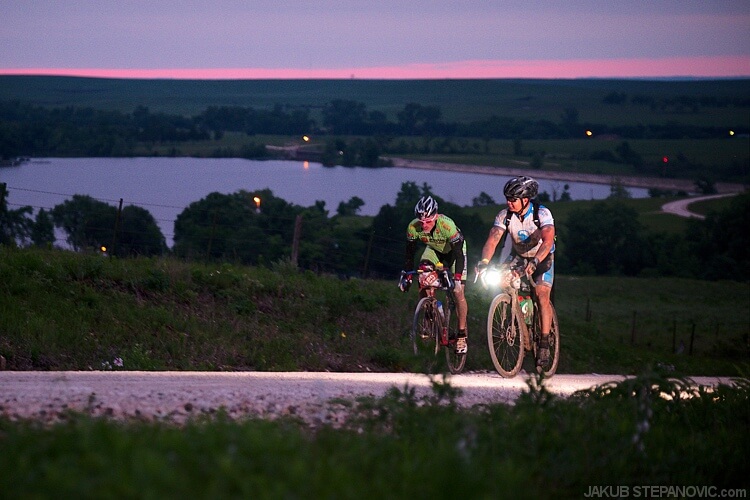
Last weekend, I photographed the Dirty Kanza 200, one of the biggest gravel cycling races there is. The event was very cool, but the coverage was anything but smooth.
Before I moved to the US, I relished riding bikes — mountain bikes, to be precise. I built and rode trails all the time, and it was fantastic. But then I decided to make a bigger step in my life: I sold my beloved custom-built mountain bike to get some cash for a plane ticket and moved here. Since then, I haven’t ridden anything besides short trips on flat pavement to get to college and work. Still, bikes are something I am passionate about. However, I hardly took any bike-related photos. Sure, there were a few frames from times long before I started doing photography for a living, like this:

Or that short session with a local bike community earlier this year, but that’s pretty much it.

That said, when I was assigned to shoot the Dirty Kanza, an annual 200-mile bike race through the Flint Hills gravel roads that attracts riders from all over the US and internationally, I was thrilled!
The race starts and finishes in Emporia, Kansas, and the town lives for the race. As the event approaches, every storefront has a “welcome riders” sign and/or bike-themed decorations throughout. I planned to get some shots from the build-up before the main event, and then, of course, get some great stuff from the race itself. Not that I’d set anything different other times, but still, I’d say I put more pressure into this event than usual. I wanted to rock it from start to finish.
On Thursday, two days before the race, I found that some early-arriving riders were going for a quick group ride to get going. All that was made public was a meetup place and time. Great, let’s get to work!
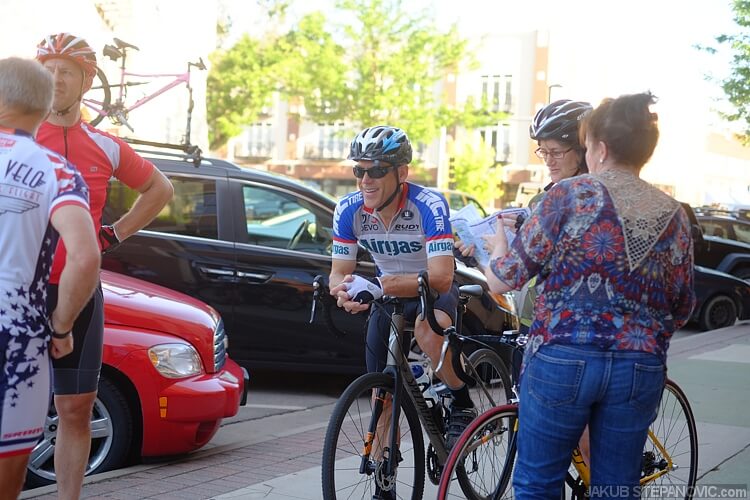
However, before I could find out their route for the outing, the group left. All I knew was that they would head north. Um, not great! But I jumped into a car and headed north, hoping to get at least something.


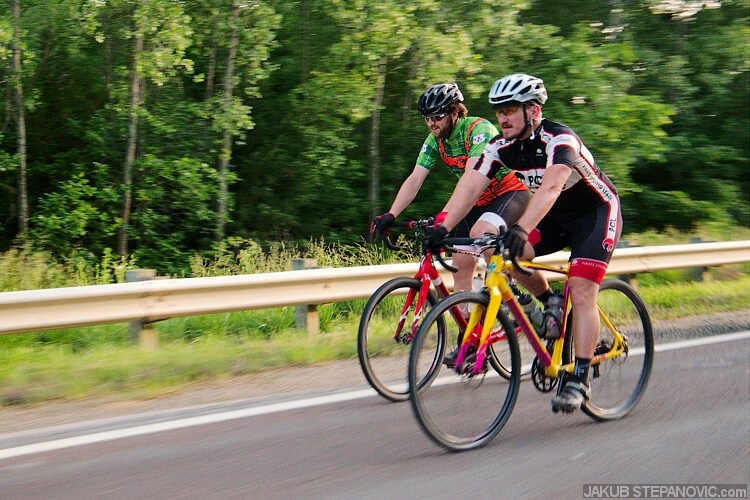
I wanted to get more, so I moved ahead, found a nice spot, and waited for riders to appear. The sun was getting down, and although there weren’t any clouds to turn red, the light was pretty nice. But the group evidently turned elsewhere because no one showed up. Dang, not great, indeed! I thought, but I couldn’t get too carried away, as I had to photograph a concert later in the evening. Friday started with race registration and the riders’ meeting.

It rained nearly all day, and it was clear that the Dirty Kanza would live up to its name, as there would be mud all over the place. I did a small interview piece with the riders, and I met people from Maryland, Washington, and in between. One guy I spoke to came from Germany. While many weren’t as thrilled about the weather, I was looking forward to the race. It began at 6 am the following morning.

Ready, set...

...Go! Early time did not prevent many supporters from filling the downtown.
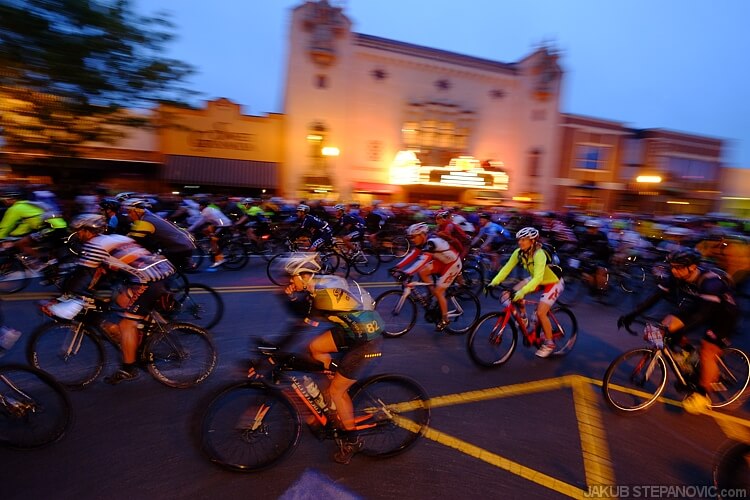
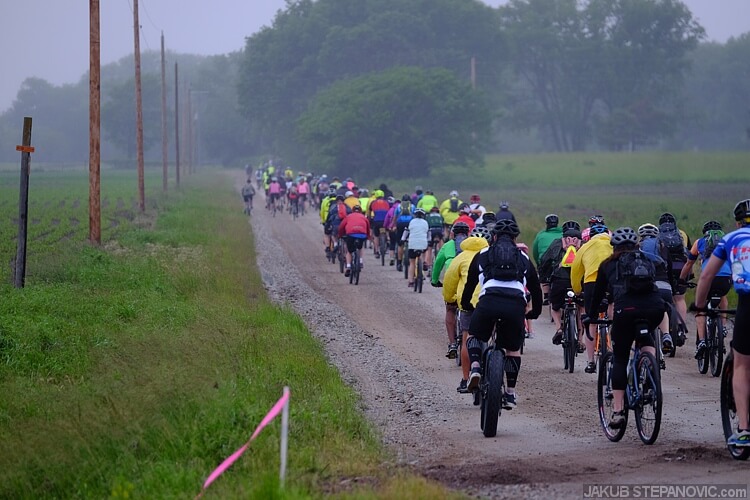

Even though the forecast for the race day was clear, riders departed in the rain. Because Kansas, that’s why.
The start was good. I covered all categories, which allowed me to get a variety of angles. On the other hand, it also meant that riders were already quite ahead by the time I uploaded the pics online. That is not desirable if you want to get pictures of a huge number of racers; it has to be close to the start line, as they tend to spread all over soon after.
The night before the race, I received the race track GPX file and looked through satellite maps to identify places where I thought there would be good opportunities for nice shots. A few of those had a water crossing; I had a composition in my head: racers fording the river, or perhaps carrying bikes on their shoulders through mud and such. So, I went there. Or, I tried. The gravel roads in the Flint Hills can range from wide, well-graded ones to narrow tracks of hard-packed dirt, which can get pretty grim when wet, even with a 4x4 rig. The only road that led to the first spot turned out to be the latter. There’s no cell phone service in many places at all, so you really don’t want to get stuck. It got muddy, rutted, and I ran into multiple water crossings before reaching the one where the bike course was. The first two were adventurous, but I rolled further — until I encountered the third one: longer, deeper, and with a strong current. It was a game over.

Although it was just about three miles from the biker’s route, I had to turn away. Damnit! Still, after more driving, I finally reached the marked course and another potential photo opportunity. A couple of seconds after I got out of the vehicle, a Jeep arrived and parked next to me. It was Eric, another photographer covering the race. He said that he nearly got stuck while trying to get here. Looking at his car, even more muddy than mine, I had no doubts. We chatted about the condition of the race and roads in general, and he mentioned that the place ahead of us was “the spot” for the best shots from the last year. “Cool,” I thought, “at least my planning from the satellite maps was spot on.” But when we got there, we saw that the river was so swollen that just wading through would be a safety hazard, let alone riding a bike across it. Sure enough, there were no bikers to be seen. We figured that the organizers had to re-route the track. Right, this felt quite bad. I had a delayed start, and the race course does not even match the GPS track the organizers provided. But then Eric gave me a snack and pointed out that the day was still at its beginning. What a nice guy!
Then, we set off towards Madison, where the first race’s checkpoint was. On the way, I saw some fans along the road, so I stopped to chat with them. They said they are still waiting for the first racers to arrive and confirmed that the track was re-routed at the last minute to bypass the river via a bridge. But suddenly, I got a message from a coworker at the checkpoint that riders were already coming. It meant that the confusion about the route extends among the fans, and perhaps even among the cyclists. Anyway, I went to the checkpoint to finally get some photos.
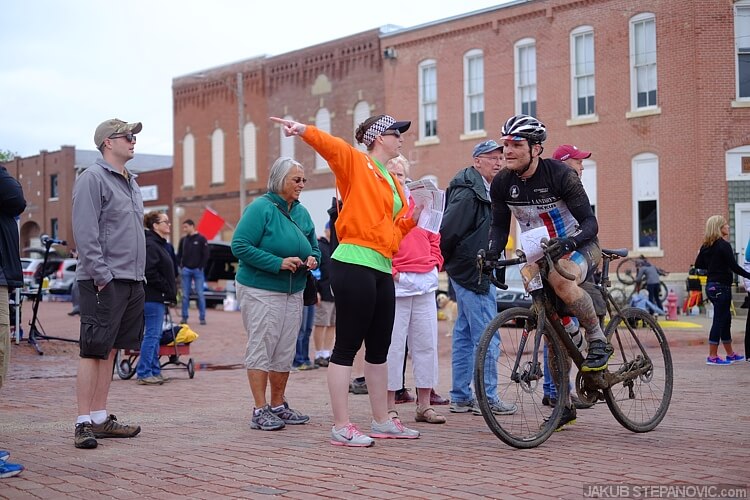


Soon, I left for the hills again, as I was hungry for some shots from the gravel roads. The course went uphill, away from rivers and mud. I had to forget the fording photo, but at least the track matched the records from now on. Since then, it wasn’t hard to locate racers.

While there were no more rivers to drive through, the roads were washed out with many sharp rocks sticking out like nails. When I got into another spot, as soon as I got out of the vehicle, I heard one of my tires leaking. With not much I could do about it, I went to take some shots.

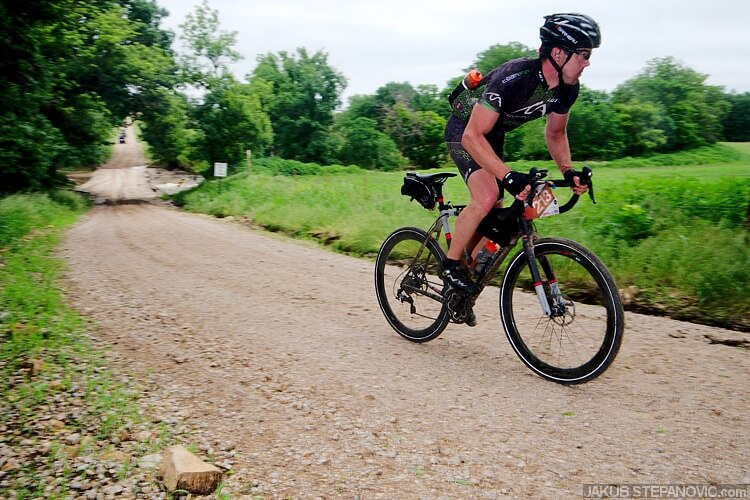
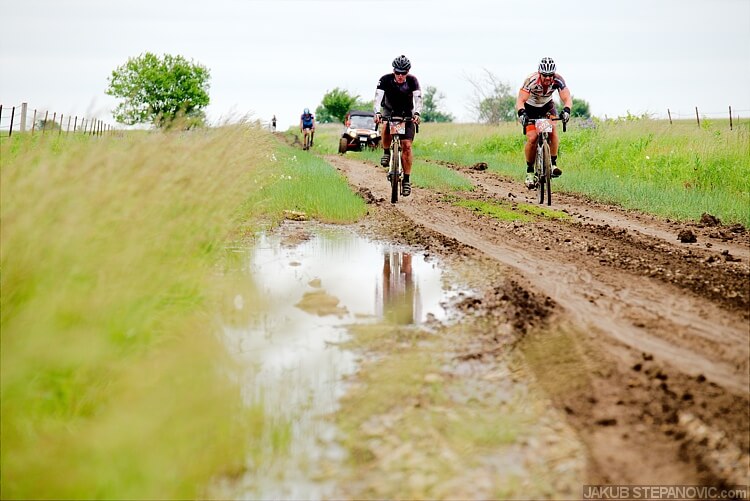
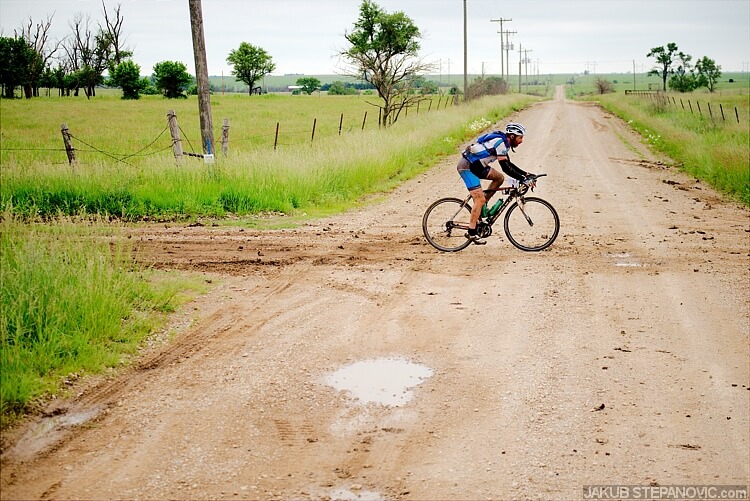

Then I got back to my car to replace the wheel with a doughnut. Just as I bolted the last nut to fix the wheel in place, a tandem stopped right next to me with the same issue I had.
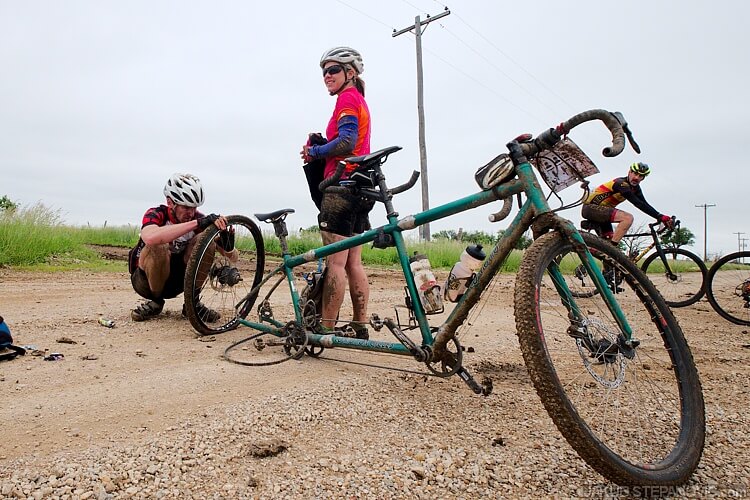

After this, I headed back into the town to get my wheel fixed so I could return on gravel later that day. However, as I pulled over towards one, I realized it was Saturday — the tire shop was closed. So I went to another one, where they told me the puncture was too big to fix and that I’d have to get a pair of new tires (uh), but they didn’t have the size for my wheels in stock (uh, oh). I had the last choice: Walmart Tire. I didn’t have a positive experience with their service, but since I had nowhere else to go, I went there. They had the tire size I needed in stock, but time was running out, and since I also had to cover a kids’ race, I just booked a later time slot and left for downtown.
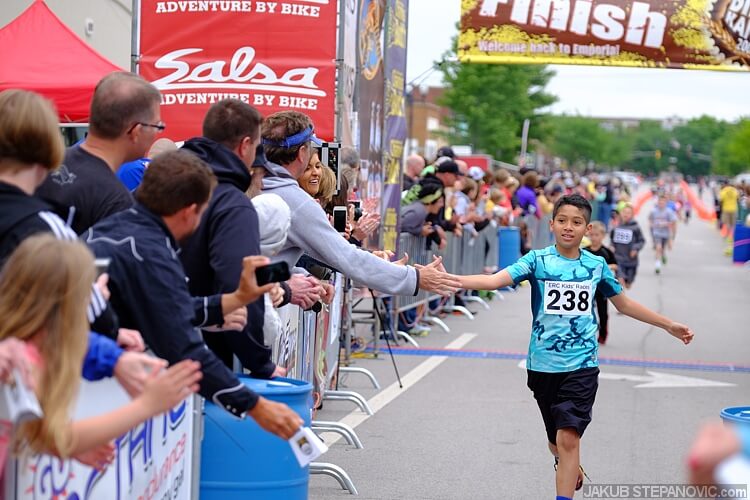
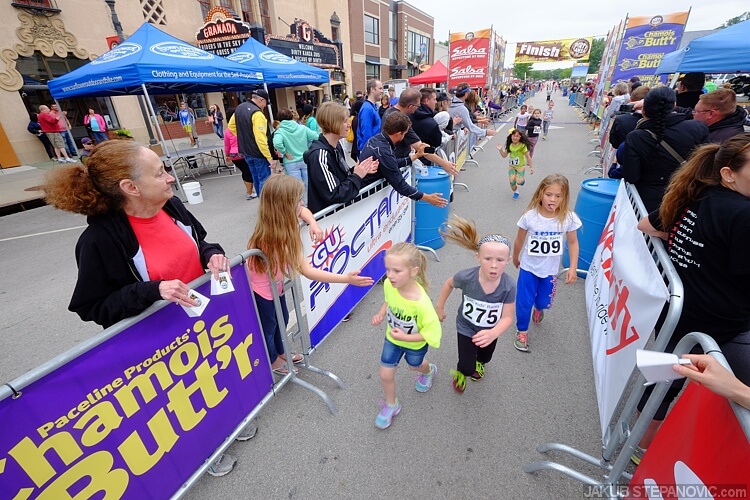
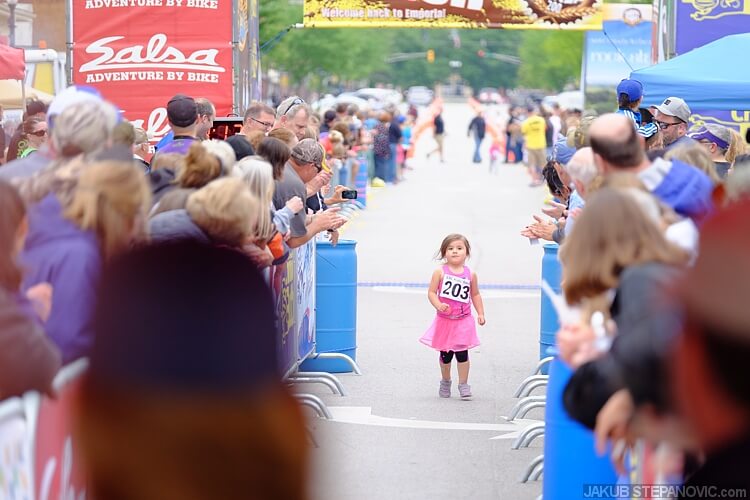
That done, I drove back to Walmart. As I anticipated it would take them a while, I took my laptop to sort and upload my images while they were at work. But man, I still had to wait, and once they gave me the receipt, I noticed that they charged me for eight additional tasks they didn’t perform. One couldn’t make this up! And when I pointed out the issue, it took three managers to fix the problem. Unreal; just what I need now, wasting more time!
Thankfully, they got it done just before another main point that day, the arrival of the first finisher of the 200-mile race. That was definitely something not to be missed. I got myself close behind the finish line, right next to the track, fenced off from spectators, within the box where the anchors were. Present at the spot, I was thinking about the shot, how to capture the winning rider, raging fans, and everything that would tell the story of the epic moment. I stopped down the lens for depth of field, and since it was already getting dark, I opted to use a flashlight to brighten the rider. I did a test shot, and everything looked good.
Well, I probably overthought it. Suddenly, not one, but two racers showed on the scene! Michael Sencenbaugh and Yuri Hauswald, although they had just covered 200 miles of mud, flew like two missiles fighting for first place. The crowd went wild, and as the racers sprinted towards the finish line, a lady jumped the barricade right in front of me to film this moment with her iPhone. What the heck!?! I zoomed out, moved my camera away from her, and took a few blind shots. Click, click, click, Hauswald took the narrow win with the time of 13 hours, one minute, and 17 seconds, and it was over. The scene burst into a raving celebration, but I was dead quiet as I checked the photos on the camera’s screen. The first shot still had the lady’s hand covering the riders, and while the second shot could do, the composition wasn’t great. The last picture was a blurred mess. It was clear: I didn’t get what I came for. The voice in my head shouted: “What just happened? How didn’t you see this coming? What a blithering idiot you are,” and similar. Knowing that the newspaper print is less than 200 dpi, so it’s possible to crop photos and reduce the loss, helped a little, but I felt terrible anyway.
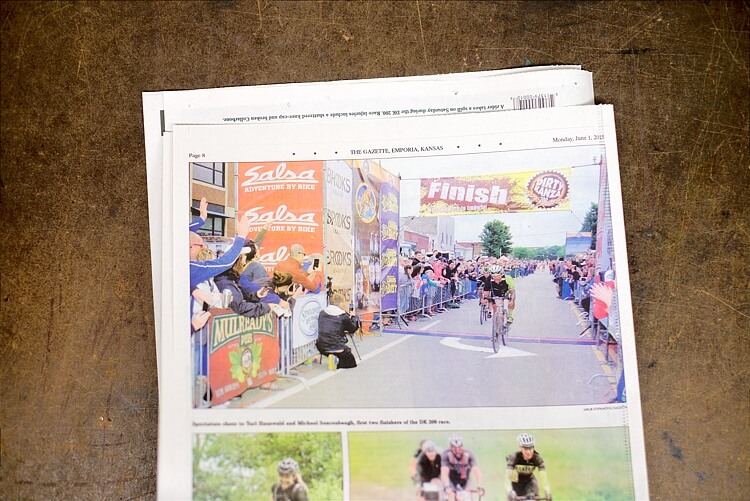
Finish line in print.
More riders came within a moment, so there was no time for more weeping or for rest.
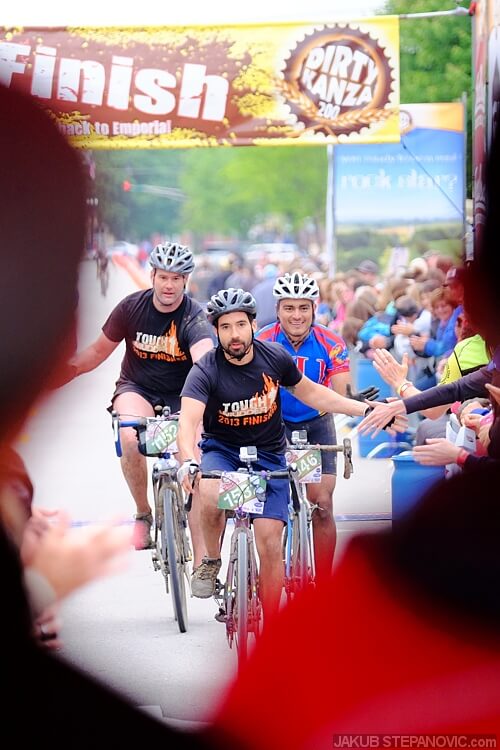

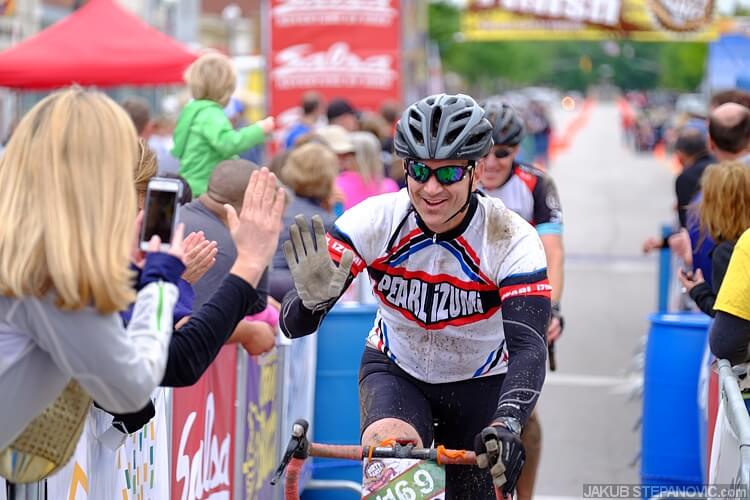
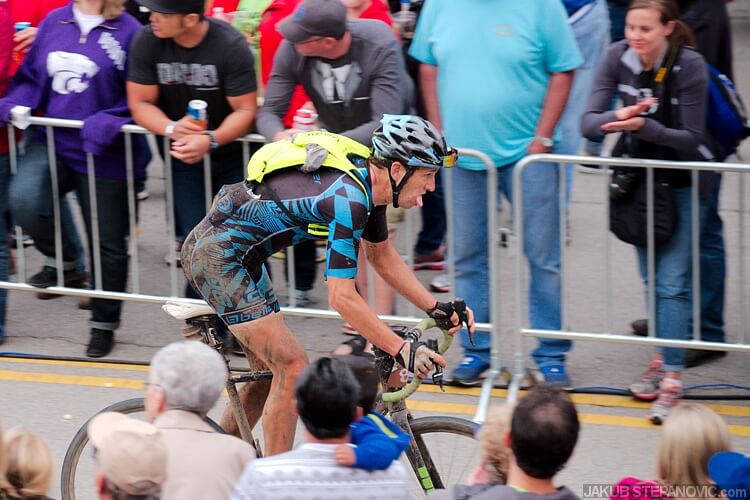
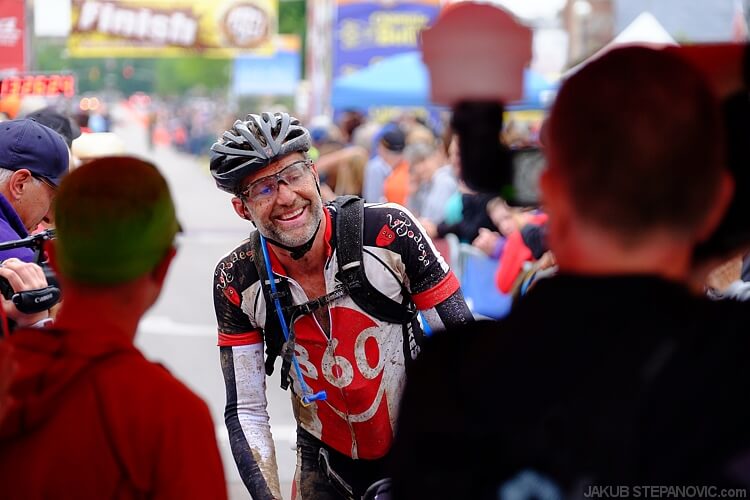

The street gradually moved from a competitive nature to a block party.


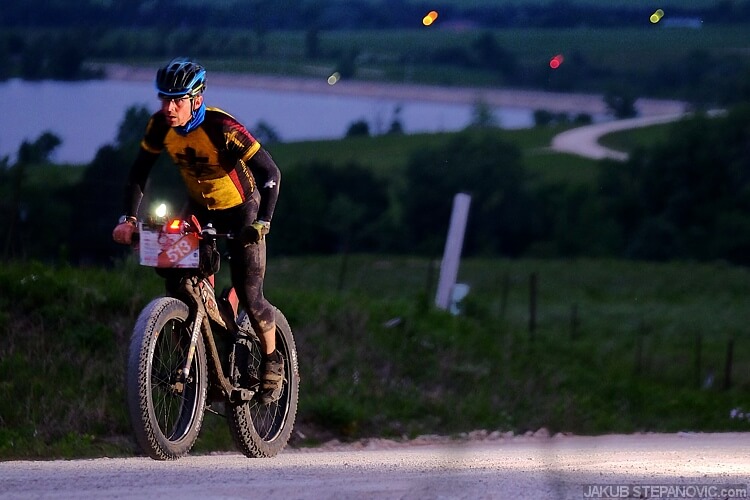
Evening descended, and I could call it a day. It was already a long one anyway. Still, I felt like crap after that bummed finish-line shot, and the other events of the day weren’t too cheerful either. And while they were photography-related, taking photos can also bring me inner peace. So I felt a need to go out and shoot more riders in the field. I left the town to do just that. The sky was covered with heavy dark clouds, so I wasn’t able to get a fancy sunset shot with riders’ silhouettes in front of the orange sky. Someday, a good shot just comes to you — light, action, you just have to hit the shutter. Today wasn’t like that. I had to fight for every frame. However, that can be fun, too, as figuring out how to capture something in challenging conditions can be, especially if there is a bit more time and space to do so; it is a sort of relaxation for me. The voice in my head resonated, “No more fu**ups today. No more. No.” See for yourself how it went:



The award ceremony was the following morning at 8 am. I was pretty broken; I can only imagine how the riders managed to get up.
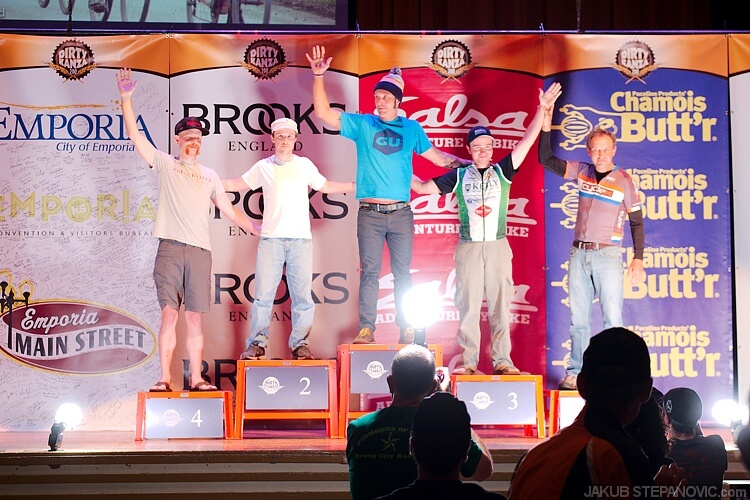
These were the five fastest: Yuri Hauswald, Michael Sencenbaugh, Jesse Stauffer, Matt Acker, and Ethan Froese. Respect to them and everybody who finished!
Anyway, that was it. Some might say that bad days happen, but I didn’t want to use it as an excuse. However, as the weekend passed and I slept out of the misery, I knew that all that mess had a positive outcome. I learned a lot from this day, and if I were shooting such an event next time, I’ll be able to do it better. And that’s what it is all about. Mistakes keep happening. The harder we try, the more they occur. But if every error pushes a person forward, it means progress. It applies to everything: photography, writing, driving, cooking, friendships... You name it. Realizing this is exciting.

Learning is an interesting path, that’s for sure.
If you’ve liked this article, you might also enjoy some of my other posts from Flint Hills, KS:
You can also visit my Blog Archives for more locations and topics. Thanks for reading!
Comments are closed.